


Best Fish for Aquaponics
Aquaponics is one of the most efficient and sustainable food production systems, as it combines fish farming and plant cultivation within a closed ecosystem. For an aquaponics system to be stable and productive, choosing the right fish species is of crucial importance. Different fish species have varying requirements regarding water temperature, oxygen levels, and feeding.
Why Is Fish Selection Important in Aquaponics?
Fish selection is one of the key elements of any successful aquaponics system. In aquaponics, fish are not only a food source but also play a central role in supplying plants with nutrients. Their metabolic waste, with the help of beneficial nitrifying bacteria, is converted into nitrates that plants use for growth and development. If the fish species is not well adapted to the system’s conditions, it can lead to unstable water quality, reduced plant growth, increased fish mortality, and ultimately poor production results. Therefore, choosing the right fish species is essential for the long-term stability and efficiency of aquaponics.
Most Common and Suitable Fish for Aquaponics
Tilapia – The Most Common Choice in Aquaponics
Tilapia is one of the most widespread and popular fish used in aquaponics systems worldwide. Its popularity stems from its exceptional hardiness, fast growth, and ability to tolerate high stocking densities. Tilapia produces a significant amount of nutrients that are ideal for plant growth, making it particularly suitable for production-focused systems. It performs best in warm water, within a temperature range of 22 to 30 °C (72–86 °F), which makes it ideal for indoor systems with controlled heating. However, in some countries, tilapia farming is regulated by law, which should be considered before introducing it into a system.
Catfish – An Efficient Fish for Intensive Systems
Catfish is frequently used in commercial aquaponics setups due to its rapid growth and high nutritional value. This fish is known for its ability to tolerate lower oxygen levels in the water, making it suitable for densely stocked systems. Catfish adapts well to different conditions but can exhibit aggressive behavior, especially in confined spaces. For this reason, it requires careful management and well-designed system layouts. Catfish is a better choice for experienced growers who have greater control over water quality and fish feeding.
Trout – An Ideal Fish for Cold-Water Aquaponics
Trout is an excellent choice for aquaponics systems in cooler climates. This fish thrives in water temperatures below 18 °C (64 °F) and requires high levels of dissolved oxygen. Trout has a high market value and is known for its high-quality meat, making it attractive for professional and commercial systems. However, due to its sensitivity to changes in water quality, trout requires precise system control and continuous monitoring of water parameters.
Koi – A Decorative Fish for Stable Systems
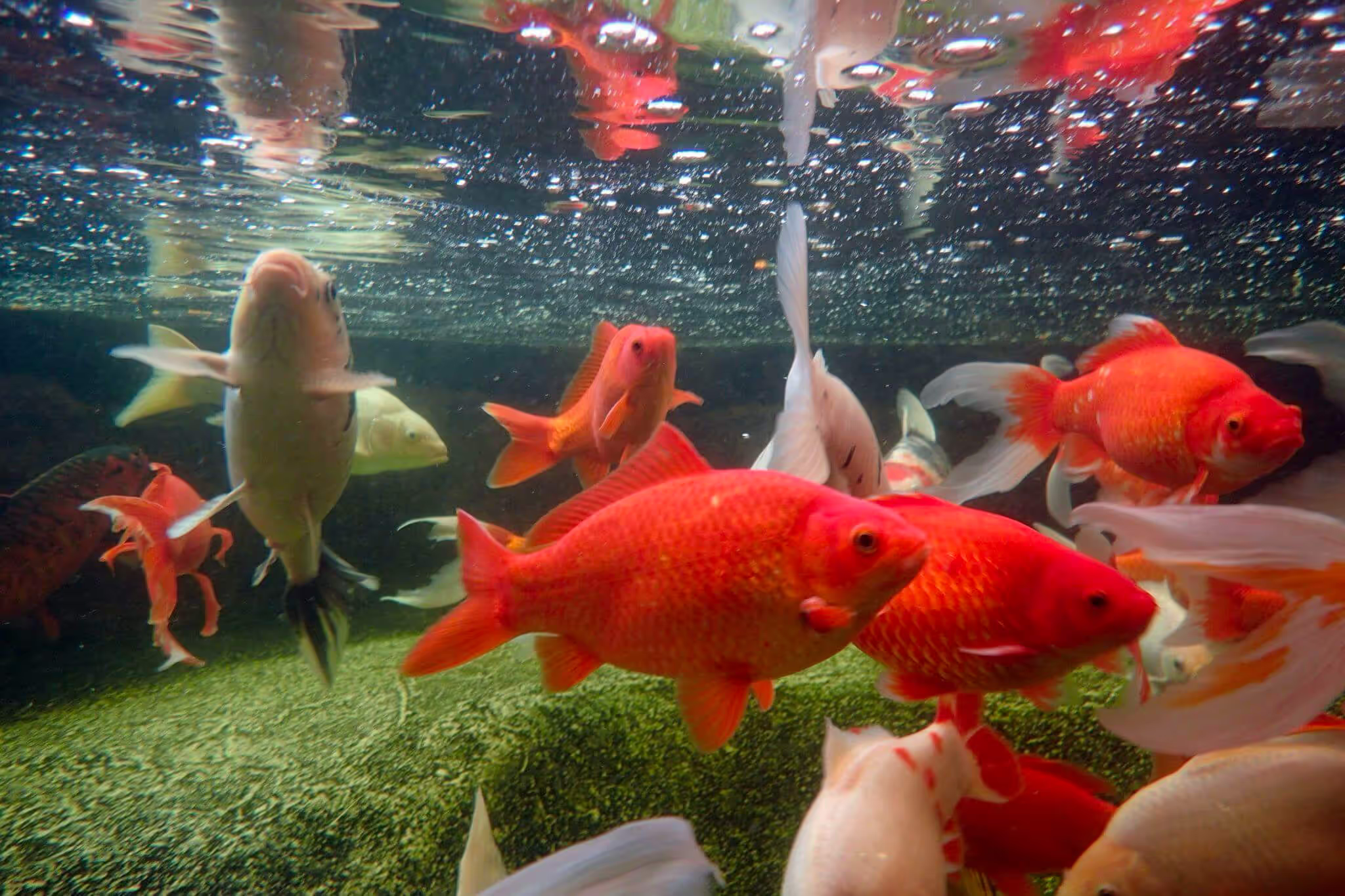
Koi fish are mainly used in decorative aquaponics systems but can also play an important functional role. They are known for their long lifespan, resilience, and ability to adapt to various water conditions. Although they are not intended for consumption, koi produce enough nutrients to support healthy plant growth. Their aesthetic value makes them an ideal choice for urban, educational, and home aquaponics systems where visual appeal is just as important as functionality.
Goldfish – The Best Choice for Beginners
Goldfish are often recommended for beginners in aquaponics due to their exceptional hardiness and ease of care. These fish easily adapt to changes in water quality and do not require complex growing conditions. Although they are not intended for consumption and have a slower growth rate, goldfish are very efficient at producing nutrients for plants. As a result, they are ideal for small-scale, home, and educational aquaponics systems.
How to Choose Fish for an Aquaponics System
Choosing fish for an aquaponics system should be based on the system’s technical and biological parameters rather than on the popularity of a particular species. One of the most important factors is the water temperature regime, as fish have a narrow temperature range in which they grow properly and produce optimal nutrient levels. Tolerance to changes in water quality also plays a crucial role - more resilient species can better withstand fluctuations in pH, ammonia, and nitrate levels, which is especially important during the system stabilization phase. Additionally, growth rate and the amount of waste produced by the fish should be considered, as these directly affect nutrient availability for plants. Fish behavior and stocking density are further important factors - aggressive or territorial species require more space and more careful tank design. Finally, the choice should align with the purpose of the system, whether aquaponics is intended for food production, education, research, or decorative use.
Proper Fish Selection as the Key to Successful Aquaponics
The success of an aquaponics system largely depends on selecting the right fish species, as fish represent the foundational link in the circulation of nutrients between water and plants. Fish that are well adapted to specific system conditions contribute to stable water quality, efficient nitrifying bacterial activity, and balanced plant growth. By aligning temperature requirements, fish resilience, behavior, and production goals, it is possible to create a long-term, sustainable, and productive system. A carefully planned fish selection not only reduces risks and losses but also allows aquaponics to fully realize its potential as an ecological and efficient method of food production.